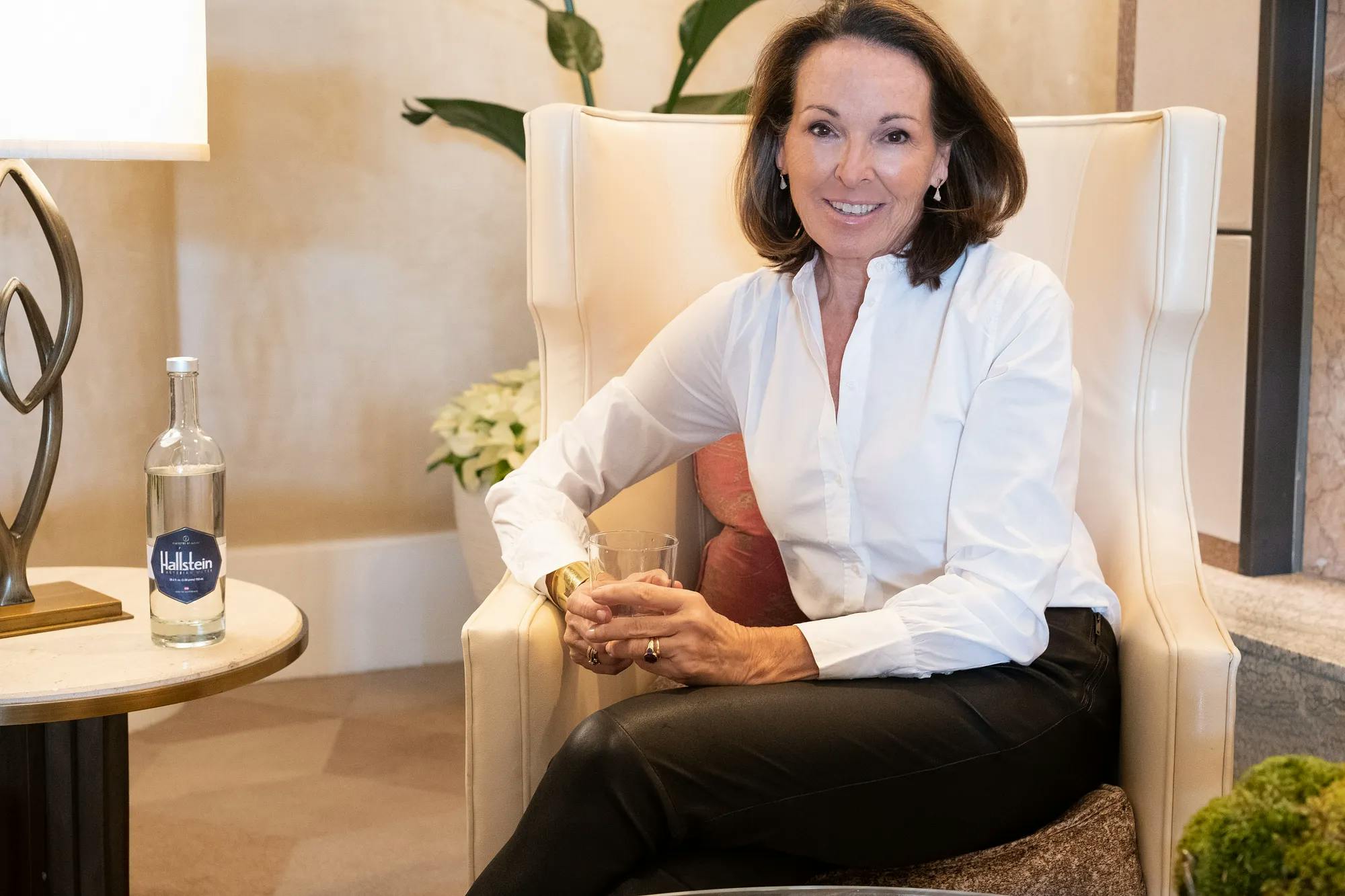
Today, more than ever, wellness is at the forefront of societal discussions. From mental health to physical well-being, women are making significant strides in bringing about change, introducing innovative solutions, and setting new standards. Despite facing unique challenges, they break barriers, inspire communities, and are reshaping the very definition of health and wellness. In this series called women in wellness we are talking to women doctors, nurses, nutritionists, therapists, fitness trainers, researchers, health experts, coaches, and other wellness professionals to share their stories and insights. As a part of this series, we had the pleasure of interviewing Elisabeth Muhr.
Elisabeth Muhr is the co-founder of Hallstein Artesian Water and is a coveted speaker about drinking water quality and its effects on the human body. She holds a BS and MS from Vienna’s University of Environmental Engineering in Environmental Engineering and Ecology, and was tapped by the Austrian Tyrolian Government for her expertise to evaluate the ecological impact of hydropower plants and the influence of highways on ecology and human well-being. She and her husband split their time between New York and Austria. Visit www.hallsteinwater.com
Thank you so much for joining us in this interview series! Our readers would love to “get to know you” better. Can you share your “backstory” with us?
I was born in Innsbruck, Austria and grew up in the most beautiful countryside. From early on my passion was the outdoors and especially water. I remember redirecting the small creek behind my family’s house with rocks and plants, so my dolls or our dog could safely be on a small float.
Before I started my dream job as part of a team for the evaluation of hydro-power plants, I decided to take a job at California State Polytechnic University in Pomona, teaching graduate students the “Effects of Ecology applied to Environmental Engineering.” But I met my husband, changed my plans, stayed in the US and the rest is history.
Can you share the most interesting story that happened to you since you started your career? What were the main lessons or takeaways from that story?
Believe it or not, each day of my life I learn something new and I am most grateful for it. I actually wake up each morning and start my day, expecting to learn something new. I see myself as a conglomerate of all the teachings of this mosaic of experiences.
Probably the most crucial experience of the past years was discovering that the quality of tap and bottled waters was so terrible and the guiding laws don’t protect consumers. I always thought that the government’s mission was to protect you and your health, but regarding water this is definitely not the case. Apart from managing our water company, my real calling seems to be that I try to motivate people to ask questions and demand change.
It has been said that our mistakes can be our greatest teachers. Can you share a story about a mistake you made when you were first starting? Can you tell us what lesson you learned from that?
I have always taught my children that everyone makes mistakes, but you should not make the same mistake twice. If you took the wrong decision, stop, reflect and learn. That’s the same in your personal life as well as your professional life, where you get second chances, but not third. I cannot remember a big mistake, but when you have a startup, like we did, you often need to make decisions without much knowledge of the eventual consequences, so you make mistakes, sometimes costly. Luckily, we are a small company with only five decision makers (myself, my husband, Alexander our CEO, Phillip and Stephanie). Therefore, we are flexible enough to change course once we realize an error. This is probably our strength and we have learned not to change our pattern.
Let’s jump to our main focus. When it comes to health and wellness, how is the work you are doing helping to make a bigger impact in the world?
Although my husband and I started the search for clean, healthy drinking water for our own family’s benefit twenty-five years ago, once we started researching the hundreds of bottled waters commercially available and then exactly what municipal waters contained, to say we were horrified would be an understatement. The ensuing journey involved a tremendous learning curve and we both are eager students in this regard, so our personal mission became a cause for shared education; sharing what we had been privileged enough to learn from nutritionists, doctors, hydrogeologist and other wellness experts and environmentalists first with our friends, and now our Hallstein community. On a proactive level, we are proud to support Operation Water, a nonprofit committed to providing sustainable water solutions to communities in Mozambique and will continue working to ensure a future of sustainable water for all.